
For years, businesses separated social media and SEO into two completely different marketing strategies.
SEO was focused on Google rankings, keywords, and website optimization. Social media was treated as a branding or engagement tool designed to build followers and visibility.
That separation no longer reflects how digital discovery actually works.
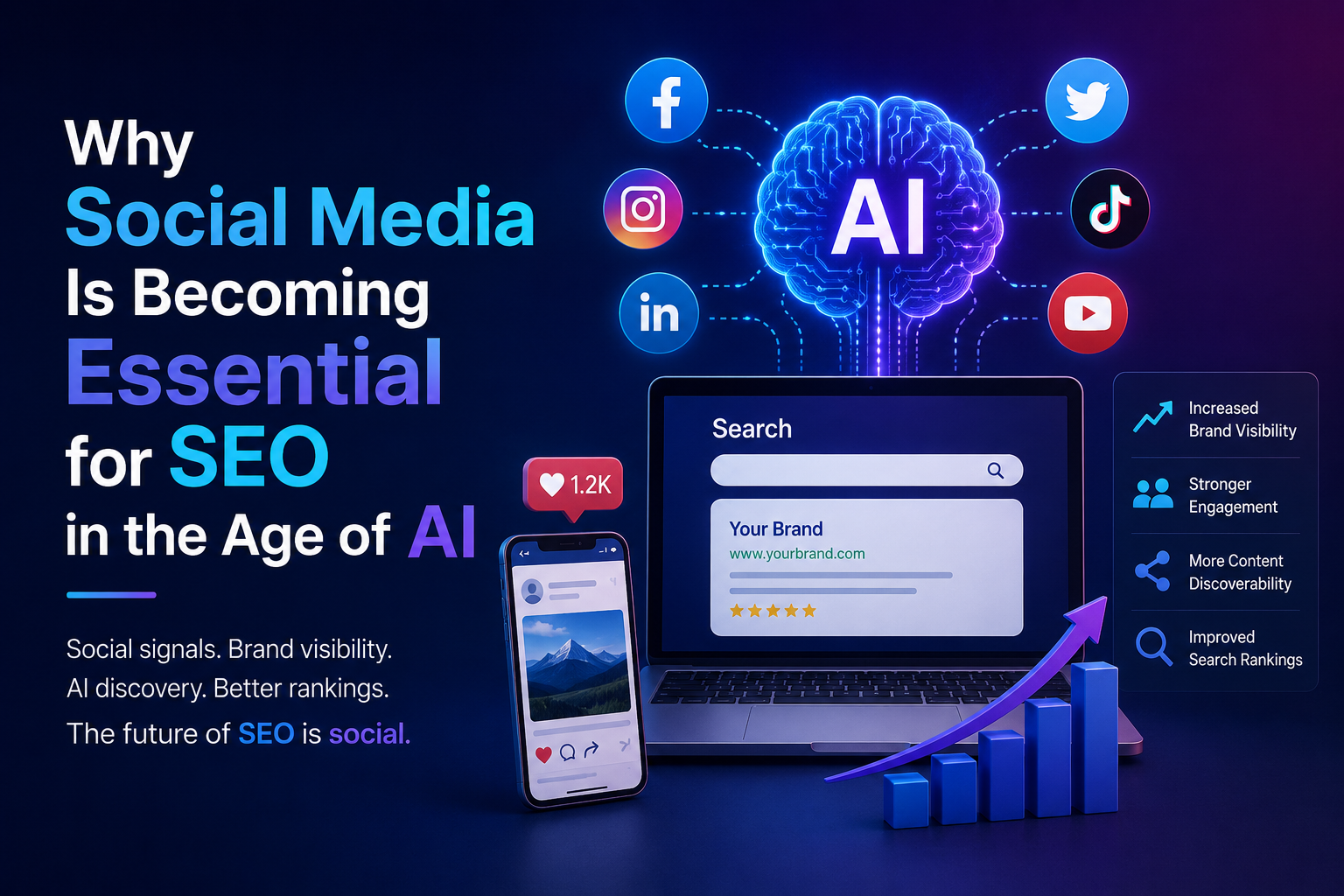
Today, social media plays a major role in modern SEO — especially as AI-powered search engines, AI-generated answers, and conversational search continue changing how people find information online.
Platforms like LinkedIn, Instagram, YouTube, TikTok, Facebook, and X are no longer just social platforms. They are becoming searchable content ecosystems that influence online authority, brand visibility, and how AI systems evaluate trust and expertise.
Businesses that understand this shift are gaining a major advantage in search visibility, while companies ignoring social media’s role in SEO risk becoming less discoverable online.
AI Is Changing How Search Works
Traditional SEO focused heavily on ranking webpages in Google search results.
AI search is changing that model.
Today, users increasingly ask AI-powered tools direct questions instead of browsing multiple websites. Platforms powered by artificial intelligence now summarize information, recommend businesses, and generate answers using data pulled from across the internet.
This means search visibility is no longer limited to your website alone.
AI systems are evaluating:
- Brand authority
- Mentions across the web
- Consistency of expertise
- Content quality
- Engagement signals
- Public trust indicators
- Industry relevance
Social media platforms provide many of these signals.
When businesses consistently publish valuable content across social platforms, they create a broader digital footprint that helps search engines and AI systems understand who they are and what they specialize in.
Social Media Content Is Increasingly Searchable
One of the biggest changes happening right now is that social media content is appearing directly in search results more frequently than ever before.
LinkedIn Articles rank in Google searches.
YouTube videos appear prominently in search results and AI summaries.
TikTok videos increasingly surface for local searches and tutorials.
Instagram posts are becoming searchable both inside and outside the platform.
This means your social content can now function as searchable SEO content, not just temporary engagement material.
A strong social media presence creates multiple opportunities for customers to discover your business beyond your website.
Social Signals Help Build Brand Authority
While Google has historically said social signals are not direct ranking factors, social media strongly influences many of the factors that impact SEO performance.
Consistent social activity helps generate:
- Brand searches
- Website traffic
- Backlinks
- Mentions from other websites
- Audience engagement
- Content sharing
- Industry recognition
These are all powerful authority signals.
When people repeatedly see your business publishing educational, valuable, and relevant content across multiple platforms, your brand becomes more recognizable and trusted.
AI-driven search systems are increasingly prioritizing brands with strong digital authority and consistent expertise signals across the web.
AI Prioritizes Recognized Expertise
One of the most important shifts in SEO today is the growing importance of expertise and credibility.
AI-generated search answers rely heavily on identifying trustworthy sources.
Social media helps establish that trust because it connects businesses and professionals to real audiences, real engagement, and real industry conversations.
Platforms like LinkedIn are especially valuable because they allow companies and individuals to demonstrate:
- Industry experience
- Professional expertise
- Thought leadership
- Case studies
- Educational insights
- Original perspectives
The businesses performing best in AI-driven discovery are often the ones consistently creating useful, experience-driven content across social platforms.
Social Media Supports Content Distribution
Even the best website content has limited SEO value if nobody sees it.
Social media plays a critical role in content amplification.
When businesses share blogs, videos, insights, and educational resources socially, they increase:
- Content reach
- User engagement
- Traffic signals
- Brand awareness
- Link opportunities
- Content lifespan
This expanded visibility can indirectly improve SEO performance by helping content gain traction faster.
Search engines and AI systems notice when content is actively discussed, shared, and referenced online.
Video Content Is Becoming a Major SEO Asset
AI search is also accelerating the importance of video content.
Platforms like YouTube, TikTok, Instagram Reels, and LinkedIn video are increasingly influencing how users consume information.
Video content helps businesses:
- Answer questions directly
- Increase engagement time
- Build trust faster
- Improve visibility across platforms
- Appear in video search results
- Create multimodal content AI systems can reference
YouTube in particular functions as both a social platform and the second-largest search engine in the world.
Businesses investing in educational video content are creating SEO assets that can continue generating traffic and visibility long-term.
Consistency Across Platforms Matters
Modern SEO is no longer just about optimizing webpages.
It is about building a recognizable, authoritative digital presence across multiple channels.
AI systems look for consistency in:
- Messaging
- Expertise
- Branding
- Topics
- Audience engagement
- Content quality
Businesses with active, educational, and well-structured social media profiles strengthen their overall authority signals.
This consistency helps search engines and AI tools better understand:
- What your company does
- Which topics you specialize in
- Whether your business is trustworthy
- How relevant your content is to user searches
The Best Social Media Strategy for SEO
Businesses looking to improve SEO through social media should focus less on chasing viral trends and more on building long-term authority.
Effective strategies include:
- Publishing educational content consistently
- Answering customer questions
- Sharing industry insights
- Creating original perspectives
- Repurposing website content into social formats
- Using structured captions and headlines
- Prioritizing quality over quantity
The goal is not simply engagement.
The goal is discoverability, authority, and trust.
Final Thoughts
Social media is no longer separate from SEO.
In the age of AI-driven search, social platforms have become critical components of digital visibility and online authority.
Businesses that consistently create valuable content across social media are improving more than engagement metrics. They are strengthening their SEO ecosystem, expanding their searchable presence, and building the authority signals AI systems increasingly rely on.
As search continues evolving, the companies that combine strong website SEO with strategic social media content will be in the best position to stay visible, trusted, and competitive online.